

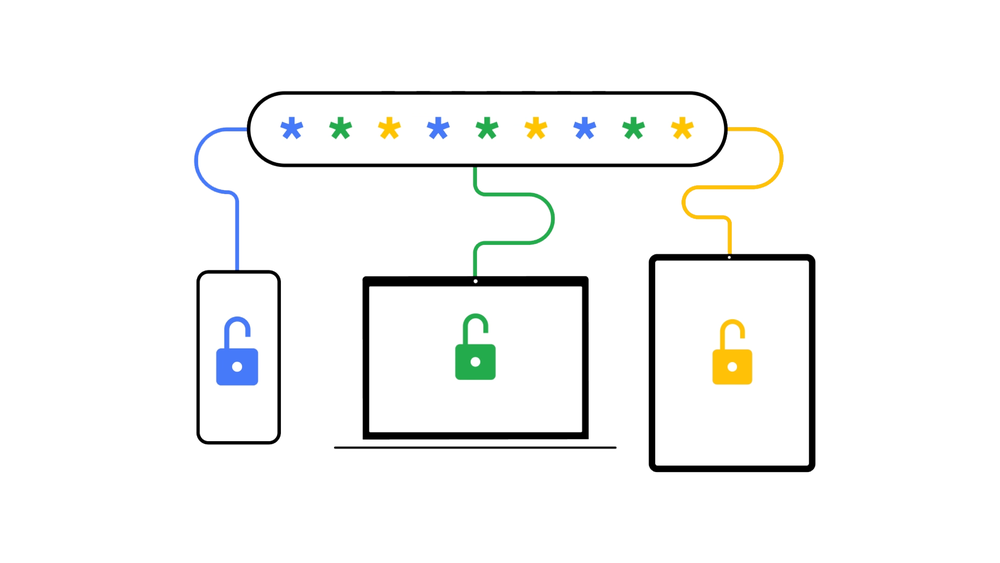
Credit: Google
Google recently announced that it’s rolling out updates to its password manager. These include password generation, password consolidation between Chrome and Android, a home screen shortcut to all the stored passwords, a password checker, a Touch-to-Fill feature, and the manual addition of passwords to the service. The latest updates unify the solutions in one module and afford users more convenience in storing and inputting passwords.
Two features that immediately stand out are the manual password input and the Touch-to-Fill feature. Prior to the update, users simply relied on Google Password Manager to automatically enter their access credentials. If they handle multiple accounts, they will have to manually input the credentials each time. With the new updates in place, they can enter the credentials for all their accounts, to be stored by the service. After which, they can pick the correct credentials that Google will autofill through the Touch-to-Fill functionality. Users can refer to the password list to verify if the usernames and passwords for all their accounts, from social media to email credentials, have been stored by Google Password Manager.
Another nifty addition is the Password Checkup feature. The functionality automatically checks if entered and newly created passwords are compromised, weak, or re-used. Should a password fails to meet Google’s security standards, the platform automatically generates a password change screen. Users can create a new password or have the platform compose a new one for them. Google Password Manager also shows the number of compromised, weak, and reused passwords, which users can fix at any time.
This comprehensive approach to password management places Google Password Manager alongside established password management apps like Bitwarden or 1Password. Perhaps it has set a new standard for SaaS solutions to follow.
A New SaaS Security Trend?
There is a dire need for password management, given the number of accounts people have across all the platforms they use daily. A recent study found that the average person works with 100 passwords, and remembering all of them is no easy feat. In addition, the latest password statistics reveal that 90% of people are worried about the vulnerability of their logins. After all, the threat of cyberattacks and data breaches perpetually looms in today’s information age.
The question now is, should SaaS solutions adopt an approach similar to Google Password Manager? It sure is a good idea. In fact, there are existing systems that specialize in such outside of the aforementioned ones, and their collective presence has fueled the global password management market to reach a valuation of over $7 billion by 2030 at an annual growth rate of 19.25%. There is room for growth in the industry as cybercrime continues to grow.
However, there are significant limitations to entering the SaaS password management arena. Many apps constantly add integrations, reducing the instances in which users have to input credentials. Some platforms even suggest to users to log in using their credentials from other platforms like Google and Facebook instead of creating new usernames and passwords.
Moreover. a study reveals that 30% of internet users have suffered from data breaches due to weak passwords. This has prompted Microsoft and other tech companies to develop more secure alternatives to passwords like passcodes and voice recognition. Of course, passwords are still the dominant form of access security but they could eventually be replaced. In the meantime, Google and other platforms with a similar approach are making the online experience safer and more convenient.










 Why is FinancesOnline free?
Leave a comment!