

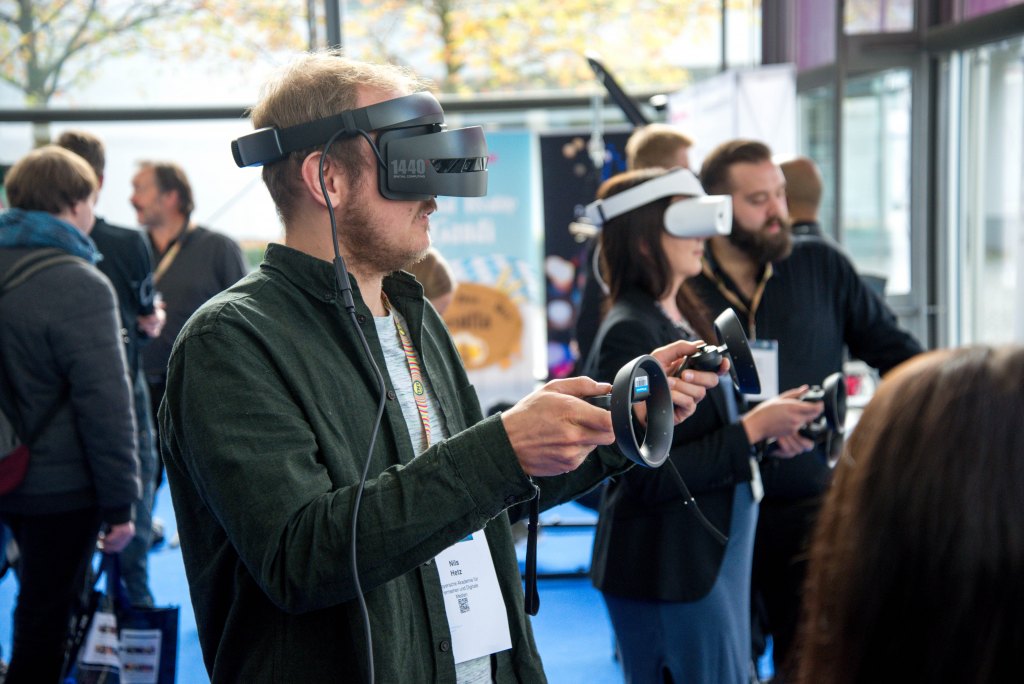
Source: Unsplash
Apple’s highly anticipated annual developer conference, WWDC, starts this week from June 6 to June 10. Apple consumer fans and tech experts are eagerly waiting for huge tech and community announcements during the week-long, free, and virtual event. Among them are revelations on its latest operating system, iOS 16, and news about RealityOS—the system that could run the company’s mixed reality headset. Even though WWDC has always been about software, it’s no secret that the tech world is most excited about Apple’s announcements on its AR/VR hardware.
We’ve reported in the past how big tech companies are in a race towards supremacy in AR/VR technology. That’s because it’s the next big thing since smartphones and everyone’s waiting for Apple to give a peek into what it currently has in development. Competitors Meta and Google have been very forthcoming with their own advancements in their AR/VR glasses, with the former announcing releases in 2023/2024 and the latter acquiring Raxium, a startup specializing in MicroLED displays.
Based on the analysis of tech experts, it’s not likely that we’ll see a mixed reality headset revealed at this year’s conference. However, Apple has been working on the tech for years and has also shown demos for the hardware that have tickled the imaginations of many. Now, people are hungry for some details on how Apple sees the world will use AR/VR gadgets in the future. If it can appease fans’ curiosity though, we know from a report in The New York Times that Apple is planning to team up with Hollywood directors like Jon Favreau to create video content for its mixed reality hardware.
Non-Disruptive SaaS Apps for Wearables
The melding of the virtual worlds and the physical is not a new concept in the SaaS industry. In fact, AR technology is being used in many apps for ecommerce, design, and education. Snap, for example, has added a new feature called “Dress Up” where shoppers can try on items before purchasing.
On the other hand, dedicated AR SaaS platforms that allow users to create AR/VR experiences for marketing, learning/training, virtual tours, etc. have been serving many clients and businesses for years. What’s truly exciting about the development of wearable devices for augmented and virtual reality is the fact that users will be able to have seamless, immersive experiences with useful applications not only in gaming and entertainment (as many people assume) but also in other industries such as engineering, architecture, healthcare, and manufacturing, just to name a few.
As technology for AR and VR headsets develops, so will the demand for the SaaS apps used with the hardware. DevOps teams will continue to improve and develop new features and tools that can be used seamlessly with AR wearable devices; however, the real challenge will be how to make these apps fully functional yet still ‘remain in the background’ so as not to disrupt the user experience. After all, nobody wants to wear AR glasses that flash notifications, ads, and other annoying stuff right on your face for the entire day.
Big tech companies—Meta, Google, and Microsoft—are pouring huge amounts of resources to develop AR/VR wearables. Though Apple hasn’t confirmed any news about the existence of its headset, we’re certain that it will not stand on the sidelines, and that’s what the suspense is all about in this year’s WWDC.










 Why is FinancesOnline free?
Leave a comment!